children’s author and teller of stories
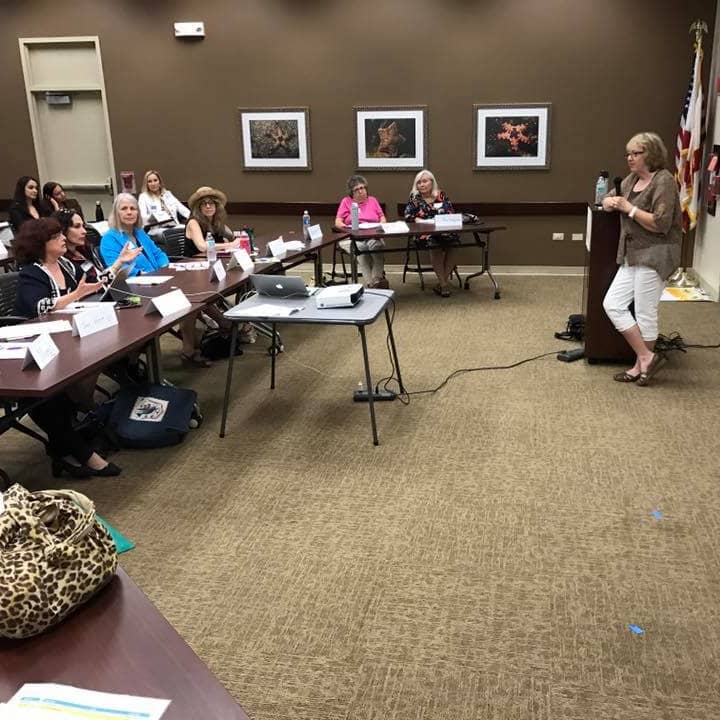
For those of you who want to get a jumpstart on writing and publishing in the new year . . . I’ll be presenting a day-long (2 -part) writing program for the Farmington (Michigan) Community Library on Saturday, January 17, 2009. The basic info is below . . . and at the Farmington Comm. Library site at: http://www.farmlib.org/ .
Event Type: Teen & adult
Date: 1/17/2009
Start Time: 10:30 AM
End Time: 3:00 PM
I hope to see you there!
Having just spent the first Christmas without my parents, I remembered this blog post I originally wrote a while ago for another site. It’s a favorite Dad story.
Enjoy.
I’ve known that life is a story since I was a child standing big-eyed and listening to my Appalachian relatives tell hair-raising tales about mountain folk. However, it took me years to learn that stories can also create a life.
You see, not too long ago, my niece invited my father to her history class to talk about his experiences in World War II. He spoke of being a platoon leader, of a soldier’s life, and fighting. According to the teacher, the class hung on his every word. My niece glowed in the limelight, the teacher was pleased, and the students interested. What they did not know—including my father—was he’d never been in the war.
He was in the service after WWII and before Korea. His army experiences get all muddled-up for him. My father has Alzheimer’s. The problem is, despite the disease, Dad’s a great storyteller. Only now, he believes his own stories.
Born and raised in the hollers of Kentucky, Dad was the last child of twelve. He had to talk to be noticed; and he talked with a passion. Then as our family grew, we pestered him to repeat favorite stories. These included the relative who got bit by a rattle snake and saved his life by drinking a quart of moonshine, how Dad learned to run faster on his knees than his feet while working in the coal mines, and the times he had outpacing the law in his 1941 Mercury Coupe while running moonshine.
Perhaps these are not the sort of stories we tell children today, but they gave a mythic quality to my father. He was faster, stronger, and wilder than all my friend’s fathers—and he truly was for many years. He raced motorcycles, he won championships in archery, and he built speed boats and water-skied—barefoot. He did anything he “set his mind to,” as he used to say. At seventy-four he was hill-climbing four-wheelers. In his mid-seventies he was still bear and wild boar hunting, though Mom had to go along to make sure he didn’t get lost. And always, he had a storyteller’s silver tongue to embellish his exploits.
Dad remains a talker. At eighty-two-with the disease advancing—there are new stories about leading groups of men, fighting in a boxing ring, doing deeds in places, and at events, he’s never been—like in WWII. We used to cluck and say, “But Dad, you couldn’t have done that . . .” Not anymore.
One day, my mother told me she’d let him go to my niece’s class to speak because it kept him alive. That’s when I realized the stories Dad tells these days are the chapters of a life he is still in the process of creating. For him, it is a necessary world where despite his weakening body, his worsening eyesight and his tremors, he fights a good war-and lives to tell the story.
Happy holidays—and keep telling your stories!
Shutta
As many of you know my Dad suffered from Alzheimer’s, and I’ve written of the sometimes funny and insightful things he’d said, or done. Before he went to live in an assisted living home he would totter after mother around their house—he was afraid to let her out of his sight—wherever she went, he went. True to form, Dad followed her when he could . . . he died Sunday, Dec. 14th, less than a month after Mom. (See below, Nov. 29th posting.)
MELVIN CRUM
Here’s a shout-out of happiness for my dear friend, Hope Vestergaard, who just revised and expanded the perennial bestseller Capricorn Rhyming Dictionary. (Originally published in 1938.) This edition, NOTHING RHYMES WITH ORANGE: Perfect words for Poets, Songwriters, and Rhymers, includes a phonetic spelling guide, a key to rhyming sounds that are spelled differently, fun sidebars, and a list of poetic terms.
Penguin couldn’t have gotten a better person to do it! Hope is a world class writer of rhymes, and books for kids. Check out her website at: http//www.hopevestergaard.com , and make sure you get a copy! (Amazon is only showing one left in stock today…)
Ciao!
Shutta
My agent contacted me and it seems that Knopf is going to make an offer on another book. YAY! It is so great to get good news these days, especially as these past few months have been devastating to me and my family and since so many publishing firms are cutting back on staff and titles.
The manuscript they want is for a very early picture book about two babies, one dog, and a pile of toys. It has only 11 ½ words. Ten and ½ of those words are the same word, and there is one “Woof!” from the dog. Now . . . anyone thinking about that may think, Geesh! That must have been easy to write. However, sometimes, what seems like the simplest thing takes a great deal of time and energy to produce.
First, I am used to writing longer picture books for the K—4 crowd, or novels. These have more words (the picture books usually 300—1,000 words), and I have more room to develop character and plot. Well . . . you guessed it, even books with only 11 ½ words (or less) need character development, and a plot arc.
It was my editor at Knopf who suggested that I try this kind of writing. I was very skeptical, at first. She had edited BRAVEST OF THE BRAVE with me and she felt I could go even younger. She sent me titles of her favorite early picture books and I studied them. I went to the library and bookstores and studied more early picture books, and thought about classic baby situations and problems. REMEMBER: you need a problem to have a plot.
I began to scribble. I had an idea, but I didn’t know how to resolve the problem without adult interference. And isn’t that the first rule of writing for kids? The child/children must solve the problem, not the adults! I knew that, but I couldn’t quite figure out how two babies, ages approximately 14 and 24 months could realistically bring a problem to a conclusion on their own. That was when I realized I needed a dog. Interestingly enough, it wasn’t until I was halfway through my novel, SPITTING IMAGE, that I realized I needed a dog in that book, too. Animals, even if the book is not primarily about them, can often act as plot triggers, or characters that propel a plot toward a desired conclusion.
The other thing that happened was that when I sat down at the computer to begin to write my story, I changed my mind about the resolution. This happens a lot to writers when they are in the flow. If your mind is open to other possibilities, sometimes a nudge comes from your muse and you know it would all work better if you went in a different direction. And so I did . . . and I like the outcome. Apparently, Knopf did, too.
There was a further obstacle as I approached getting this manuscript into shape. How do you present it on the page? If I simply wrote down my 11 ½ words—which are all dialogue— in alternating paragraphs, that would have been silly. No one could tell what was going on! On the other hand, we writers know better than to give illustration notes. That’s a major No-no! So how to send it in? I decided to do it somewhat like a script. Under the title I have a line stating that most of the following is in note form as the illustrations carry the plot. I gave the two characters sexually ambiguous names (Chris and Pat) just to keep the plot understandable. (Thanks, Hope—a writing buddy of mine—for that suggestion.) Nowhere in the book will their names appear. I set up the situation, then I explained what was happening either just before/after each line of spoken dialogue. It ended up being a little over two pages long.
It was a real challenge and one that I was hesitant about at first. But challenges can be fun, especially when you think you’ve come through it with something substantial. Altogether, it took a little more than two months to write those 11 ½ words of dialogue. Now, I wonder how long it will take to edit it, and what form that editing may take. I suspect if there are changes, these will be not so much to the dialogue itself, but more to the flow of the plot as translated through the illustrations. So it will take just the right illustrator.
I know it has the right editor, she is as excited as I am. And I’m so glad she challenged me to stretch myself. It seems I will soon be covering a variety of audiences from the very young to teens. Knopf also has a fantasy chapter book of mine that we are in the process of editing right now (tentatively titled THOMAS AND THE QUEEN OF THE DRAGONS). With my range of picture books, my folktale (WHO TOOK MY HAIRY TOE?), and my teen novel (SPITTING IMAGE), I’ve got most of the bases covered from birth to fourteen. As I head into a new year, I am beginning to wonder “What’s next?”
Here’s to keeping all your options open!
Have a happy holiday season,
Shutta
I need to get back to work. I REALLY NEED to get back to work . . . there is a January deadline looming.
There are so many lures out there, so many siren songs to do other things—not the least of which is that I must help my family with the transition and all the STUFF one has to do after a parent dies: paying bills, cleaning house, closing services, etc. And, of course, there will always be the need to take care of Dad for as long as he is with us. We set up Hospice for him last Monday. Still . . . write is what I do, and there are times that work is a solace.
I saw a sweatshirt I liked the other day in a catalog. (I’ve yet to start my Christmas shopping and was vaguely flipping through a catalog thinking: Oh yeah, Christmas is this month.) Anyway it went something like this:
“The top ten reasons to procrastinate: #1 . . . “
Ha!
Well, off to work. I have revisions due on a fantasy chapter book that was sold to Knopf last year. They’ve just secured an illustrator. There will be black and white line drawings throughout. This is a story dear to my heart. So why is it that, sometimes, the very thing we love doing is what we put off ?
p.s.: I forgot to mention, I also have jury duty this week. Hey! Another way to procrastinate, and it’s not even of my own doing . . . so I can be guilt-free for a bit.
OK. Settling down now,
Shutta
She left us early in the morning on November 19, 2008—only 3 1/2 weeks after she was hospitalized. All four of her children sat with her through her last night. Just before she died, a grandson and a daughter-in-law arrived. Our dad, due to his advanced Alzheimer’s, could not be there for her. Nor would he have understood what was happening to his wife of 58 years.
One well-meaning visitor to the hospital told me that God never puts more on your plate than you can handle. Listening to her final breaths—and the long, long emptiness that stretched between each one—I’m not sure that’s true.
Goodbye, Mom.
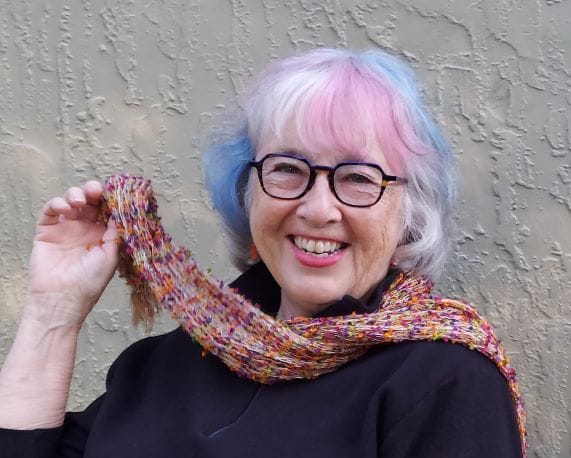
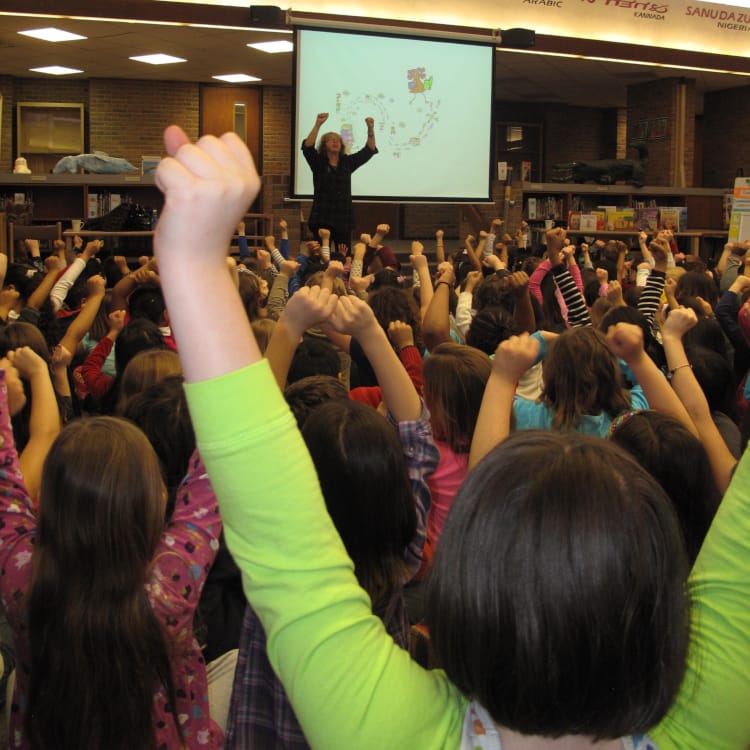
Shutta Crum writes books for children and poetry for adults. She is also a storyteller, a lecturer and a librarian. In addition to her current nine books she has four forthcoming books. Several of her articles about teaching and writing have appeared in professional journals. In 2005, she was honored by being one of eight authors invited to the White House for the Easter Egg Roll.